
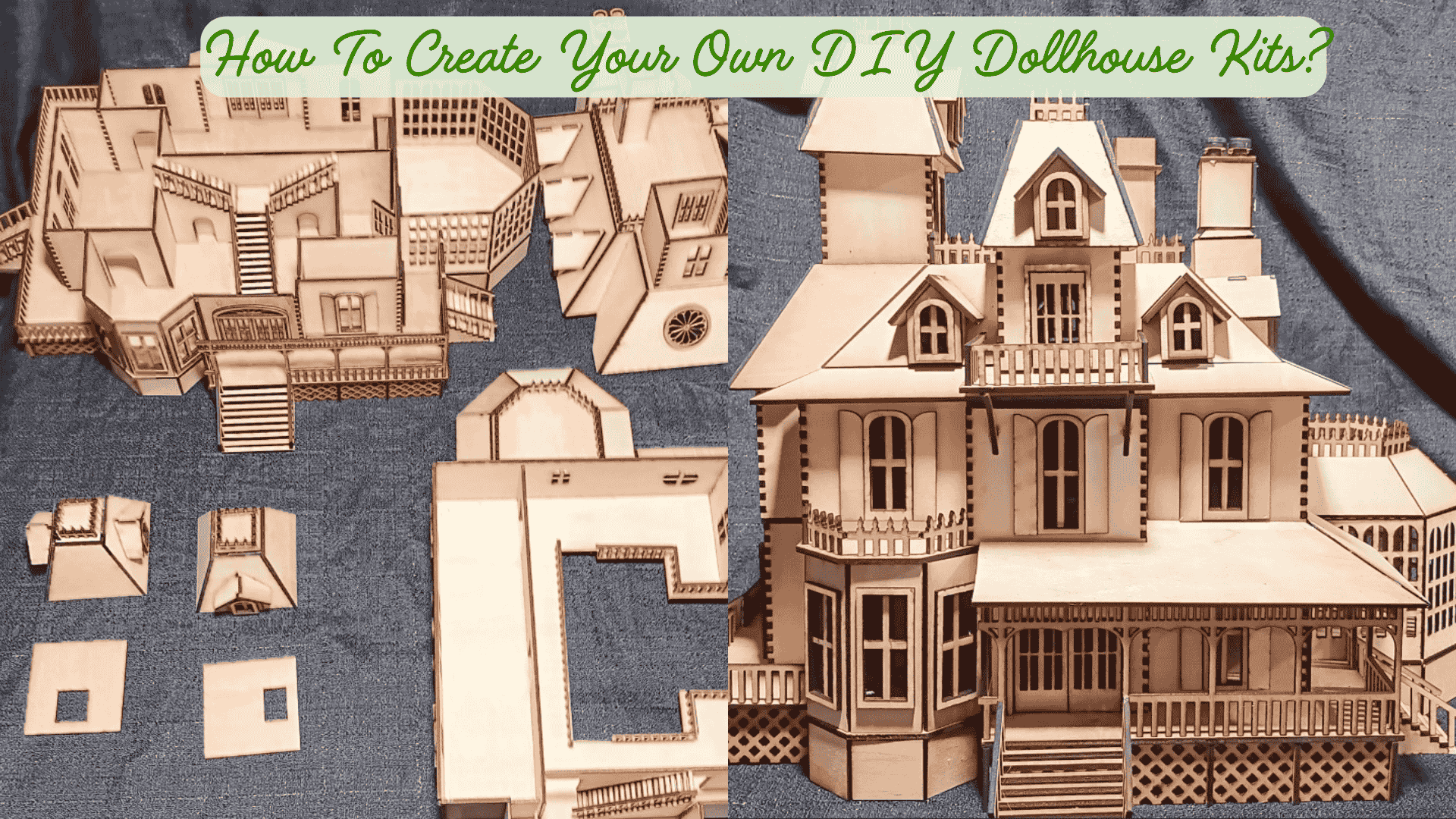
Imagine crafting your own mini world, all from your own designs, where every detail aligns with your vision. That's what designing and building your own dollhouse kit from scratch is all about. It's not merely about assembling pre-made pieces; it's about being the architect, the designer, and the creator of a tiny, yet incredibly personal universe. Can you imagine this?
For those of you who cherish originality and have an entrepreneurial spirit, this isn't just a craft project; it's a door to opportunity. You might start simply by wanting to create a unique toy or decorative item, but with the right approach, this can evolve into a thriving business, selling your custom-made kits on platforms like Etsy or eBay.

This guide is going to help you transform that seed of an idea into a tangible product. Whether you're a seasoned craftsman or a curious newcomer, you'll gain insights into producing your own dollhouse kits using tools like laser cutters to achieve precision and quality.
Getting your idea off the ground requires a careful blend of creativity and strategy, and we're going to navigate that path together.
Step 1: Designing Your Own Dream Dollhouse Kit
I'm going to walk you through transforming your vision for a dollhouse into a tangible design. This isn't just about putting pencil to paper; it's about envisioning a miniature world that's uniquely yours.
Choose a dollhouse theme.
Start by choosing your theme. Will it be a Victorian mansion, a cozy cottage, or perhaps a modern abode? The theme sets the mood and guides your choice of architecture and decor.
Something that I personally find intriguing, is for example Diagon Alley dollhouse kits, which are quite trendy.
Check out all the possible different dollhouse styles and themes here.
Choose the scale for your dollhouse kit.
Once the theme is chosen, pick the scale. Usually, dollhouses come in scales such as 1:12 or 1:6, but the most successful dollhouse kits on the market are on a scale of 1:24, or around that scale, as it can vary a little bit between brands.
Your choice will determine the size of your design and the intricacies involved.
TIP IF YOU WANT TO SELL YOUR OWN KITS: As most dollhouse kit brands are on a small scale, why not produce a brand of 1:12 DIY dollhouse kits? Include dollhouse furniture. Or the opposite: on a very tiny scale.

Magical book nook kit by @ MyersMiishop
Sketch your building plans.
Now let's sketch the blueprints. You're going to find out about a crucial step – drafting a precise plan.
This includes mapping out each room, wall, and piece of dollhouse furniture. These blueprints become the cornerstone of your DIY kit.
If you want to take the DIY route seriously, you might want to invest in design software to make this process more efficient, like Sketchup or Fusion 360.
In the video below for example, you can learn how to use this software to design a dollhouse. Of course, there's more to it for a dollhouse kit, beware of that and that you will need to learn from others.
Study your audience and their needs.
As you finalize your design, consider the needs of those who'll build from your kit.
Your instructions must be clear and your pieces well-designed to make assembly intuitive. Always remember, that good design ensures that people who purchase your kit can execute your vision flawlessly.
Nobody likes complicated dollhouse kits or unclear manuals with mixed pieces of furniture in 40 different bags, for example.
Furthermore, do your research on popular dollhouse kits on forums, Facebook groups, successful YouTube channels, and others.
Materials and Tools: Preparing to Create your DIY dollhouse kit.
I'm going to help you navigate the selection of materials and tools required for building your own dollhouse kit.
For your dollhouse kit, choose something that resonates with you in terms of look and feel, but also consider the ease of cutting and durability.
Plywood is a popular choice for laser cutting, given its smooth finish and uniform thickness.
Now, laser cutters are the centerpiece of your toolkit. They can be a game-changer in the level of detail and precision you can achieve.