If you’ve ever looked at a dollhouse and thought “this feels more like a palace than a home,” chances are you were looking at something inspired by the Rococo style.
It’s one of those design styles that can easily go over the top—but in miniatures, that’s actually part of the charm. Someone on my Facebook page actually came up with the idea, so thanks, and let’s see what it’s all about!
What is in fact the Rococo style (in simple terms)?
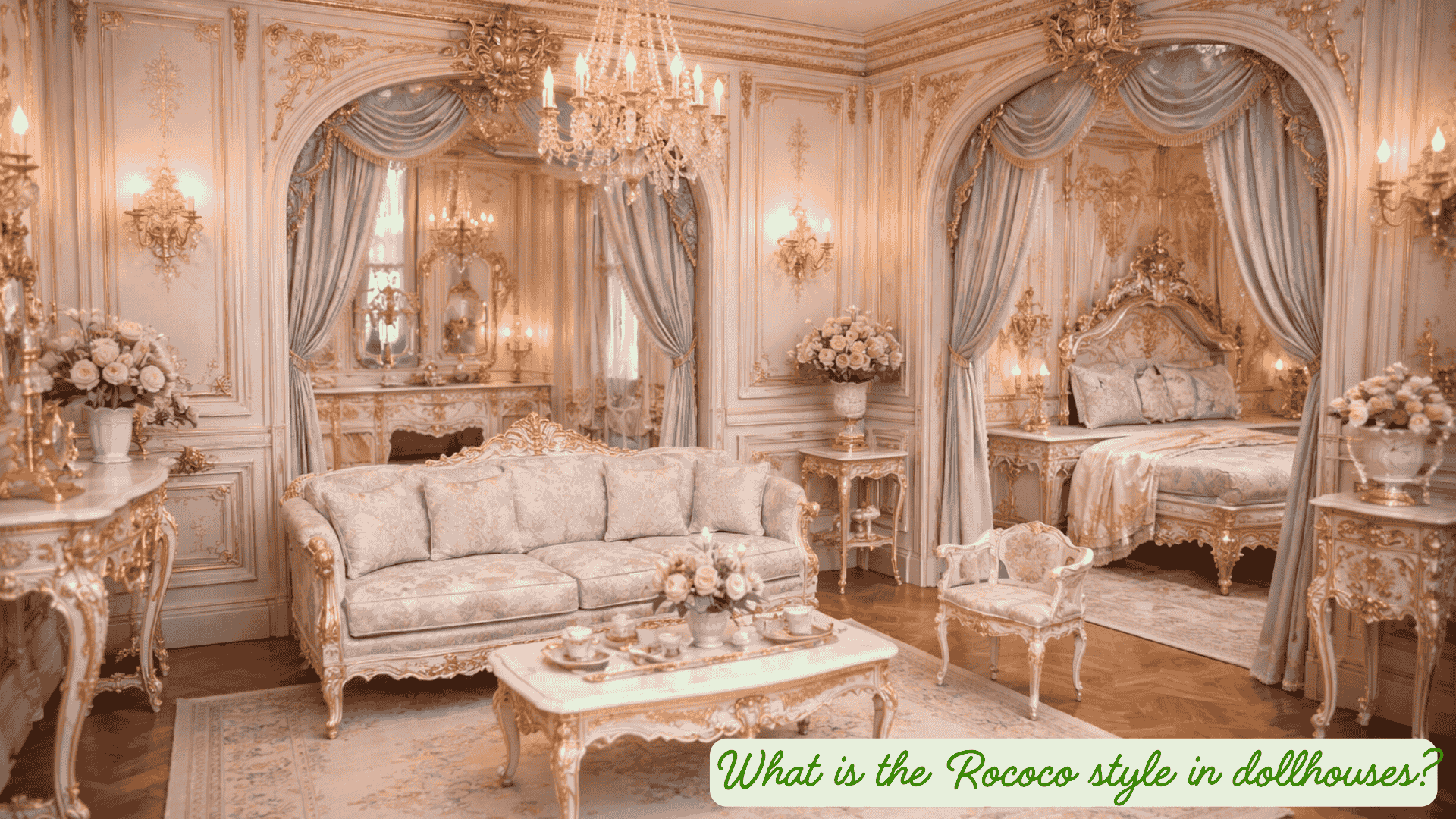
Rococo started in 18th-century France as a reaction to the heavier Baroque style. Think less strict symmetry and more playful elegance.
Typical elements you’ll recognize:
Soft pastel colors (pinks, blues, creams)
Gold accents
Curved lines instead of straight ones
Decorative details like scrolls, shells, and floral carvings
A lighter, more decorative feel overall
In real interiors, this style was used in salons and aristocratic homes. In dollhouses, it works especially well because all those small details become easier to appreciate.
Rococo is detail-heavy, and that’s exactly why it works in miniature.
In a full-size room, it can feel overwhelming. In a dollhouse:
The ornamentation becomes interesting instead of being too much
Gold accents catch the light subtly
Curved furniture shapes feel more realistic
Small decorative elements (mirrors, chandeliers, moldings) instantly set the tone
It’s one of the few styles where adding detail actually improves the overall look. I wouldn’t do that, for example, for the Tudor style.
Real examples ( get some inspiration )
Here are some good examples of how people recreate Rococo-style furniture in miniature:
Julia Crayn – Rococo dollhouse bed
This Rococo bed tutorial by Julia Crayn is a really nice example of what defines the style in miniature. It starts with a fairly simple structure, but quickly builds up into something much more decorative by layering curved elements, ornaments, and soft fabrics.
What stands out is how everything—from the carved-looking details to the fabric curtains and padded panels—works together to create that typical Rococo feel: elegant, slightly over-the-top, but still light and refined, which is exactly what makes this style work so well in dollhouses.
Miniento
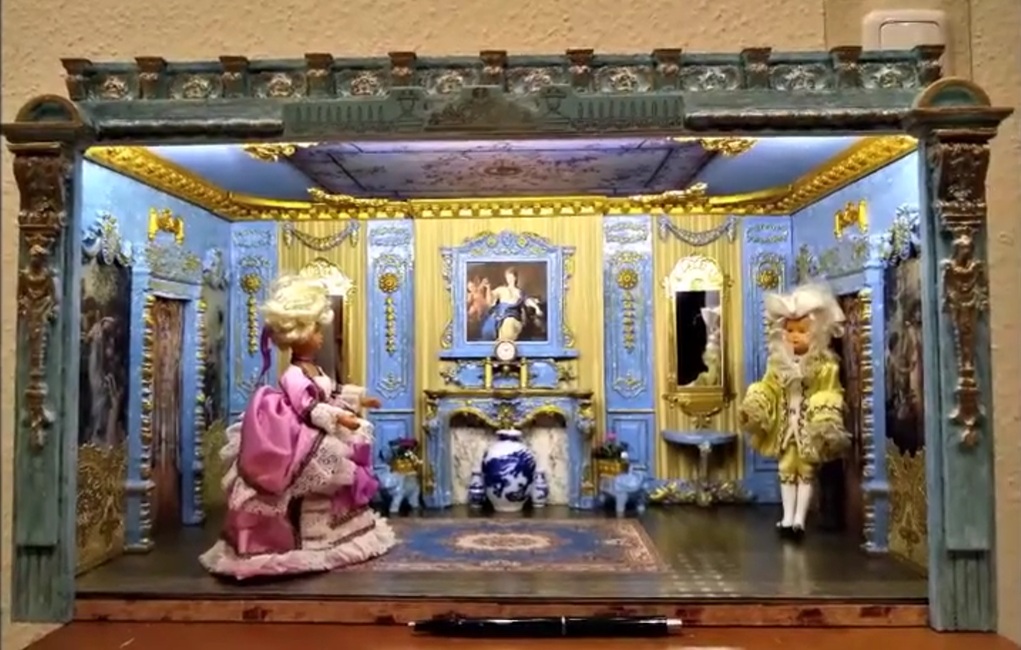
In the next video by Miniento, you can clearly see which collors are overwhelmingly present in the Rococo style! As with my list of favorite YouTubers, I am surprised this channel has so few subscribers. It is a great tutorial, and the paintwork is incredible!
What you’ll find on Etsy
If you don’t want to build everything yourself, Etsy is honestly one of the best places to find Rococo miniatures.
You’ll quickly notice that certain pieces come back again and again—especially ornate seating, mirrors, and decorative accents.
Ophelia’s garden
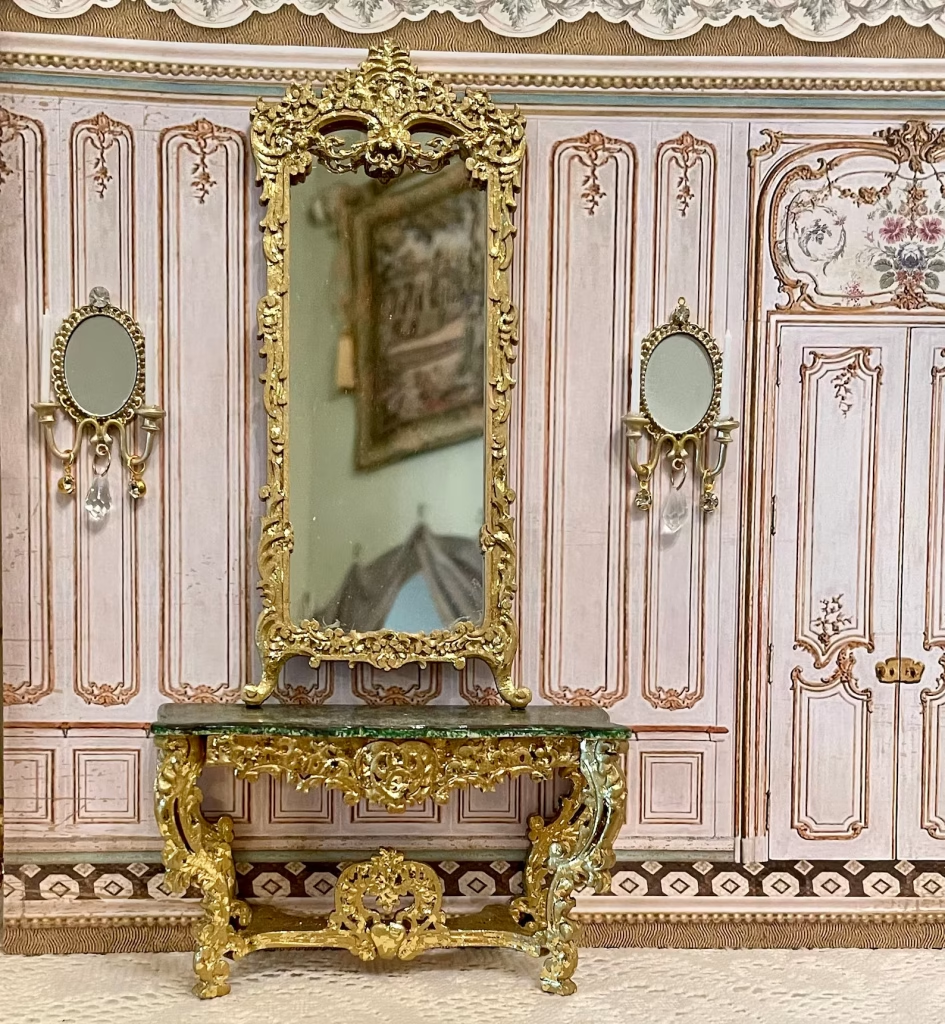
This Rococo wall sconce is a really nicely detailed little piece. It’s made from brass with a mirrored backing, and what stood out to me are the genuine Czech crystal rhinestones—they give it that subtle sparkle you want without looking cheap.
It also comes with small built-in candles, even though it’s non-electric, so it still reads as a proper wall light in a scene. At about 2 inches high (1:12 scale), it’s not big, but it’s detailed enough to catch your eye. I like that it feels decorative without being overdone.
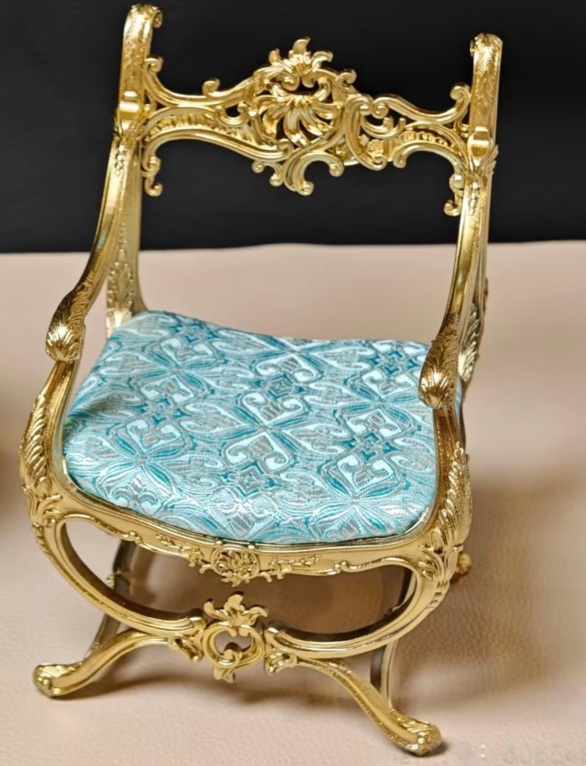
This Rococo armchair by Luxeticks is one of those pieces that immediately stand out in a small room. It’s made from resin using high-precision 3D printing and then hand-painted, which explains the sharp detailing on the frame.
The gold finish, combined with the curved shape, gives it that classic ornate look, but what really makes it work is the upholstery.
You can choose between a soft blue or ivory damask fabric, both with subtle patterns that fit perfectly with the style. It’s available in both 1:12 and 1:6 scale.
One thing I noticed while browsing: the same items can vary quite a bit in quality. The finer the detailing (especially carvings and gold finishes), the more convincing the final result will look.
My Final Conclusion
Rococo isn’t the easiest style to get right, but it’s one of the most rewarding.
I think it would work best when you don’t fill every inch!
Let me know what you think about this style in the comments below!