

When working on miniature books for dollhouses, one important detail often gets overlooked: the thickness of the paper. Choosing the right type of paper can make a big difference in how realistic and manageable your tiny books feel.
Let's go over the best options, find out what experienced miniaturists recommend, and what to avoid.
( For those paying close attention to this blog post: Find 2 free PDF printables files of my new mini coloring books all the way below in this article )
Miniature Book Paper Recommendations at a Glance
Here’s a quick overview of recommended paper choices:
Feature |
Recommendation |
|---|---|
Pages |
Regular printer paper (70-90gsm) |
Covers |
Thicker cardstock (around 200gsm or more) |
Avoid |
Very heavy paper for the inner pages |
Print Settings |
Use the highest resolution available |

What Paper Thickness Works Best for Miniature Books?
For 1:12 scale or similarly small miniature books, most miniaturists recommend using regular printer paper for the inside pages.
Paper between 70gsm and 90gsm tends to look the most natural once folded and bound. It's thin enough to lie flat and gives the tiny books a realistic "scale thickness" without looking bulky.
If you prefer a slightly sturdier feel for the pages, you can go up to 100 gsm, but anything thicker risks making the book look too stiff at such a small scale.
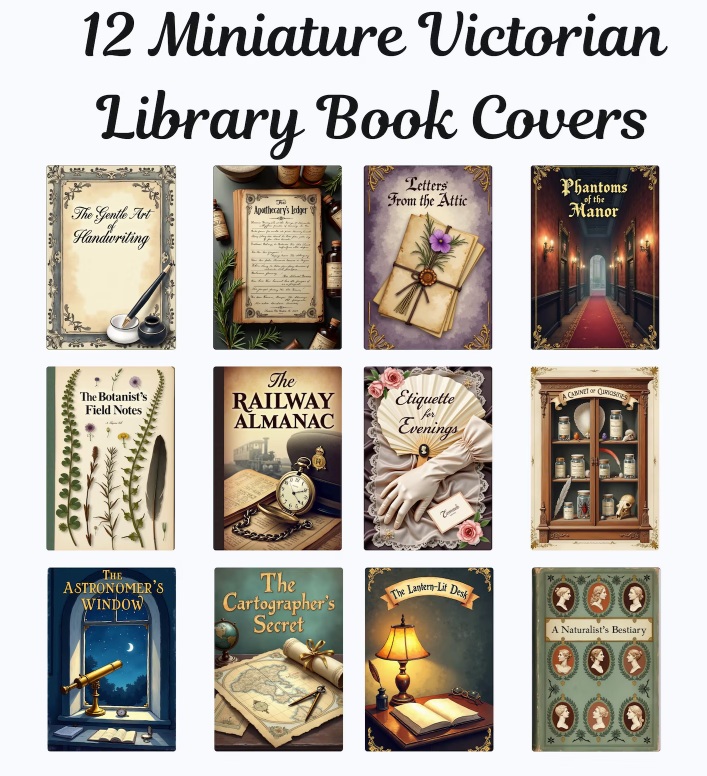
Mini book covers, however, are a different story. They need to be stronger to hold the shape of the book, so cardstock — usually 200 gsm or more — works much better.
What About Parchment-Like Miniature Books?
Sometimes, you might see miniature books that have a vintage or parchment-style appearance.
In these cases, artists often use specialty papers that are slightly heavier than regular printer paper, typically around 90gsm to 120gsm.
These papers are designed to have a textured, aged look while still being flexible enough to work on a miniature scale.
Or, you could order printing paper that already has this vintage look, like on Amazon:
True parchment paper, however, can sometimes be too stiff, so many miniaturists opt for faux-parchment or lightly textured papers that balance realism with ease of handling.
One of the best videos I found where the creator uses parchment paper for the interior pages is by this lady from Junk Journal Ideas. Check it out, it's fantastic!